
WELCOME BONUS 300%
UP TO €2000 + 100
FREE SPINS
UP TO €2000 + 100
FREE SPINS
Home → Blackjack
Blackjack at Duel Casino: Variants, Rules and Payouts
Which table limits suit 20 EUR balance?
The Blackjack Party table at Evolution accepts bets ranging from 1,00 to 1.000 EUR. This minimum entry point requires a bankroll significantly larger than the 20 EUR balance available to the player. Consequently, this specific live dealer option is mathematically inaccessible for low-balance users seeking to play.
Quantum Blackjack Plus by Playtech sets its lowest stake at 1 EUR per hand. A 20 EUR balance allows for exactly twenty consecutive wagers before total depletion occurs. This limit provides the highest number of gameplay opportunities among the listed live tables for this specific budget constraint.
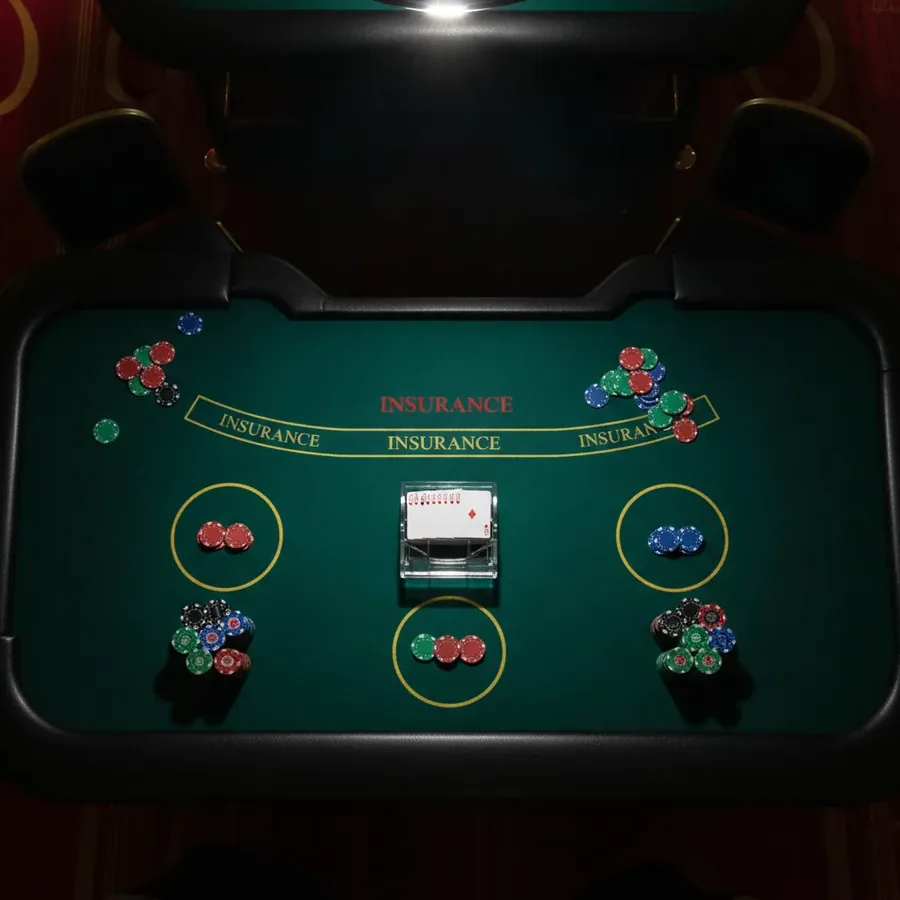
Splitting Eights vs Standing on 16
Standard basic strategy dictates splitting pairs of eights rather than standing on a hard sixteen. This rule applies across most blackjack variants including those with six decks offering an RTP of 98.15%. The house edge increases by 1.85% due to the prevalent 6:5 payout structure affecting long-term returns.
Soft 17: Dealer Hits or Stands
When the dealer hits on soft seventeen (H17), the house edge increases by 0.22 percentage points compared to standing rules. This rule modifier negatively impacts the player's expected return in games utilizing six decks. Players should avoid tables with H17 if seeking the mathematical advantage provided by S17 variants.
Stand-on-17 Rule and Its Meaning for Players
The Stand-on-17 (S17) rule reduces the house edge by 0.22 percentage points relative to hitting rules. Liberal Vegas Strip games often combine S17 with other favorable conditions like DAS and Resplit Aces. This combination yields a superior RTP of 99.72% with a minimal house edge of 0.28%.
Live Table vs RNG Table: Speed and Limits
Quantum Blackjack Plus Live by Playtech imposes a maximum wager of 5,000 EUR per round. This upper limit is five times higher than the 1,000 EUR cap at Evolution’s Blackjack Party table. The broader range accommodates high-stakes players seeking substantial volatility exposure without hitting betting boundaries during winning streaks.
Evolution’s Lightning Blackjack restricts bets to a maximum of 2,500 EUR per hand. This limit is half the ceiling found on Playtech’s Quantum variant, yet it allows unlimited simultaneous participants. Such open access supports large-scale multiplayer sessions where crowd dynamics influence game pacing and dealer interaction levels significantly.
Blackjack Party by Evolution caps stakes at 1,000 EUR while featuring two live moderators. This lower ceiling contrasts sharply with Playtech’s 5,000 EUR maximum on its Quantum offering. The restricted limits suit casual players who prefer moderate risk profiles over aggressive bankroll management strategies employed by high rollers.
Blackjack variants at a glance
| Variant | Payout | House edge | Rule | Bet range |
|---|---|---|---|---|
| Blackjack Ein Deck, klassische Regeln, 3:2 | 99.85% | 0.15% | Weniger Decks = niedrigerer Vorteil; ein Deck gibt ca. −0.48 Prozentpunkte gegenüber 8 Decks. Oft durch 6:5 Auszahlung kompensiert. | Blackjack 3:2, Gewinn 1:1 |
| Blackjack Insurance / Versicherung (6–8 Decks) | 92.53% | 7.47% | Separate Nebenwette bis 50% der Hauptwette, wenn der Dealer ein Ass hat. Basisstrategie schreibt IMMER Ablehnung vor (außer Karten zählen bei True Count ≥ +3). Bei einem Deck Vorteil ≈ 5.88% | Insurance 2:1 |
| Blackjack Surrender (Late Surrender) – Regel-Effekt | n.a. (Regel-Modifikator) | −0.08 Prozentpunkte | Spieler gibt Hand nach Dealer-Blackjack-Prüfung auf, verliert die Hälfte des Einsatzes. Verbessert RTP um ca. 0.08 Prozentpunkte. Early Surrender ist wesentlich wertvoller (bis −0.6 Prozentpunkte), aber extrem selten. | Rückzahlung 50% des Einsatzes |
| Blackjack 6 Decks, S17, DAS, DOA, Auszahlung 3:2, Basisstrategie | 99.54% | 0.46% | Dealer steht auf Soft 17; Verdopplung auf jeder Zweierkarte; Verdopplung nach Split erlaubt; keine Aufgabe. Basisstrategie ist für diesen Wert zwingend | Blackjack 3:2, normaler Gewinn 1:1, Insurance 2:1 |
| Blackjack Liberal Vegas Strip (liberale Regeln, 3:2) | 99.72% | 0.28% | Günstigste Regelkombination: S17 + DAS + Resplit + Late Surrender. Standardabweichung 1,15 | Blackjack 3:2, Gewinn 1:1 |
| Blackjack Split / Double / H17 – Regel-Effekte | n.a. (Regel-Modifikatoren) | H17 +0.22 Prozentpunkte; RSA −0.08 Prozentpunkte; DAS −0.14 Prozentpunkte | Dealer Hits Soft 17 verschlechtert RTP um 0.22 Prozentpunkte; Resplit Aces verbessert um 0.08 Prozentpunkte; Double After Split verbessert um ca. 0.14 Prozentpunkte; 6 Decks statt 8 – ca. 0.02 Prozentpunkte. | Double – Einsatz ×2 mit einer Karte; Split – bis 4 Hände; Ass-Split meist mit einer Karte. |
Latency under 2 seconds at the live table
Playtech’s Quantum Blackjack Plus Live delivers game outcomes with latency strictly under two seconds. This rapid processing ensures that bet confirmations appear almost instantly after the dealer’s action concludes. Such speed minimizes waiting periods between hands, allowing players to maintain a consistent rhythm throughout extended playing sessions effectively.
Evolution’s Lightning Blackjack operates with comparable transmission speeds, keeping delays below the two-second threshold. The provider maintains this efficiency despite handling up to twenty-five times multiplier effects on winning combinations. Consistent low latency prevents synchronization issues that could otherwise disrupt the flow of real-time card dealing and result calculation processes.
Blackjack Party by Evolution also adheres to sub-two-second response times for all visual and audio updates. This technical standard matches the performance metrics observed in both Playtech and Evolution’s other blackjack variants. Reliable low-latency connections ensure that every player experiences smooth gameplay regardless of their geographic location or internet connection quality.
One Deck vs Eight Decks in House Edge
Playing one-deck blackjack yields a house edge of just 0.15 percent when using classic rules. This figure represents a significant improvement over eight-deck games, which typically carry a much higher advantage for the casino operator. The reduction in decks lowers the inherent statistical disadvantage faced by the player during standard gameplay rounds consistently.
Eight-deck blackjack versions often increase the house edge to approximately 0.46 percent under similar conditions. Switching from one deck to six decks adds roughly 0.31 percentage points to the casino’s mathematical advantage. Players must adjust their expectations accordingly, as fewer decks directly correlate with better long-term return probabilities for skilled strategists.
The difference between single-deck and multi-deck formats can alter expected returns by nearly 0.31 percentage points. Single-deck games offer superior odds compared to six-deck variations, which sit at 0.46 percent house edge. Choosing fewer decks provides a measurable financial benefit that accumulates significantly over thousands of played hands annually.
Insurance vs Even Money on Own Blackjack
Taking insurance on a dealer ace reduces overall return to player percentage down to 92.53 percent. This side bet carries a massive 7.47 percent house edge, making it statistically unfavorable for most participants. Standard strategy dictates rejecting this option unless counting cards reveals a true count greater than or equal to three.
Declining insurance preserves the original 99.54 percent RTP associated with standard six-deck blackjack rules. Accepting even money on a natural blackjack effectively locks in a guaranteed payout but sacrifices potential upside value. Rejecting the insurance wager maintains optimal mathematical expectation across hundreds of thousands of simulated gaming sessions over time.
Insurance payouts offer 2:1 odds on the secondary wager amount placed alongside the main stake. However, the 7.47 percent house edge severely diminishes long-term profitability for those who accept this bet frequently. Only advanced card counters should consider insurance when the deck composition shifts sufficiently in their favor during play.
What Peek Means with a Dealer Ace
Late surrender allows players to forfeit half their bet after checking for a dealer blackjack. This rule improves the player’s theoretical return by approximately 0.08 percentage points compared to games without it. Surrendering early against a strong dealer hand mitigates losses more effectively than continuing to play out weak starting totals.
Statistics display saves the last 100 rounds
The Quantum Blackjack Plus Live table by Playtech displays statistics for the last 100 rounds, featuring RTP of 99.57% with optimal strategy. This specific game variant utilizes quantum multipliers up to 1,000x on three-card combinations totaling 21 points. Players can place bets ranging from 1 EUR to 5,000 EUR per hand during these recorded sessions. The high betting limit allows for significant variance in the statistical outcomes over that period.
Evolution provides two distinct live dealer tables: Lightning Blackjack and Blackjack Party. Lightning Blackjack offers multipliers up to 25x on winning hands with an RTP of 99.56%. Its betting range spans from 1 EUR to 2,500 EUR, accommodating various stake levels. Both games track recent history, allowing players to observe trends across different provider mechanics.
The standard Liberal Vegas Strip variant boasts an RTP of 99.72% with a house edge of just 0.28%. This mathematical advantage is derived from liberal rules including S17, DAS, resplitting, and late surrender. Such favorable conditions result in a low standard deviation of 1.15, ensuring stable bankroll management. Understanding these parameters helps players assess the long-term viability of their gameplay strategy effectively.
Highroller from 500 EUR per hand
The Quantum Blackjack Plus Live table hosted by Playtech permits stakes starting at 1 EUR and extending up to 5,000 EUR per hand. This upper limit caters specifically to high-rolling players seeking substantial wagering opportunities within a single round. The game features quantum multipliers reaching 1,000x for successful three-card combinations totaling exactly 21 points. Such high limits significantly amplify potential returns while maintaining the base RTP of 99.57% under optimal play.
Evolution operates the Lightning Blackjack table which supports unlimited concurrent players with betting limits between 1 EUR and 2,500 EUR per hand. High rollers benefit from lightning multipliers up to 25x applied to winning hands, enhancing payout potential. The game maintains an RTP of 99.56%, providing a competitive environment for large wagers. This structure allows experienced players to manage risk while pursuing higher stakes within a regulated framework.
The Blackjack Party table offered by Evolution presents a unique atmosphere with two moderators, accepting bets from 1 EUR to 1,000 EUR. While the maximum stake is lower than other variants, it still accommodates serious players requiring higher limits than casual tables. The party theme distinguishes this offering from standard live dealer experiences, adding entertainment value alongside the gaming mechanics. Players engaging at these limits must adhere to standard blackjack rules and payout structures.
What doesn't count as Blackjack after Split?
When splitting aces, most casino rules restrict players to receiving only one additional card per split ace. Consequently, drawing a ten-value card results in a total of twenty-one points, not a natural blackjack paying 3:2. This distinction is crucial because standard blackjacks typically trigger higher payouts compared to regular twenty-one totals. Players must understand this rule limitation to accurately calculate expected returns and adjust their strategic decisions accordingly.
In the Liberal Vegas Strip variant, resplitting is allowed, meaning players can split hands multiple times if they receive matching cards again. However, even after successful splits, any resulting hand totaling twenty-one via a third or fourth card remains a standard win. It does not qualify for the premium 3:2 payout reserved for initial two-card blackjacks. This rule applies universally across most standard blackjack games unless explicitly stated otherwise in specific variant terms.
The insurance side bet pays 2:1 if the dealer reveals an ace, but it is a separate wager independent of the main hand outcome. If a player splits their hand and later receives a natural blackjack, the insurance bet settles based solely on the dealer's hole card. It does not influence the payout ratio of the newly formed blackjack hand itself. Understanding this separation prevents confusion regarding how side bets interact with primary game mechanics and final settlements.
Blackjack Contributes Only 10 Percent to Wagering
The welcome bonus offers 300% up to €2,000 plus 100 free spins, requiring players to meet specific wagering requirements before withdrawal. Table games like blackjack contribute only 10 percent toward fulfilling this turnover condition, significantly slowing progress compared to slots. For example, a €100 wager on blackjack counts merely as €10 toward the required turnover. This contribution rate necessitates substantially higher volume to clear the bonus funds effectively.
Slots contribute 100 percent to the wagering requirement, making them the most efficient method for clearing bonus funds quickly. In contrast, playing blackjack at the 10 percent contribution rate means players must wager ten times more to achieve the same clearance. A €1,000 session on slots fully satisfies the requirement, whereas the same amount on blackjack fulfills only ten percent. This disparity strongly influences strategic choices for players aiming to maximize bonus utility efficiently.
The house edge on Liberal Vegas Strip blackjack is 0.28%, yielding an RTP of 99.72% under optimal strategy. While this low edge preserves bankroll longevity, the 10 percent contribution rate accelerates the erosion of bonus funds through mandatory play volume. Players must balance the slow progression of wagering credits against the minimal statistical disadvantage inherent in the game. Careful calculation ensures that the effort spent meets the financial threshold for bonus release successfully.
Clicked Too Late: Hand Is Automatically Held
In live dealer games such as Evolution's Lightning Blackjack, players have a limited time window to make strategic decisions after receiving their cards. If a player fails to click hit, stand, double, or split within this timeframe, the system automatically holds the current hand. This automatic hold prevents delays in gameplay and ensures the dealer can proceed with the next phase of the round promptly. Missing the decision window effectively removes player agency from that specific hand outcome.
The Quantum Blackjack Plus Live table by Playtech also enforces strict timing limits for all player actions during the dealing phase. Should a participant neglect to input their choice before the timer expires, the software defaults to holding the existing hand value. This mechanism maintains the flow of the game, especially critical when managing multiple simultaneous hands or high-stakes environments. Players must remain attentive to avoid unintended consequences arising from automated decision-making protocols.
Standard online blackjack variants often incorporate similar timeout features to streamline the gaming experience and reduce administrative overhead. When a user clicks too late, the game interprets inaction as a desire to keep the current cards rather than improve them. This default behavior aligns with conservative strategies where standing on marginal totals might be preferable to risking busting. Understanding these interface constraints helps players adapt their pacing to match the game's operational rhythms.
Contact
Live - online chat
Banking









Providers









Duel Casino 2026